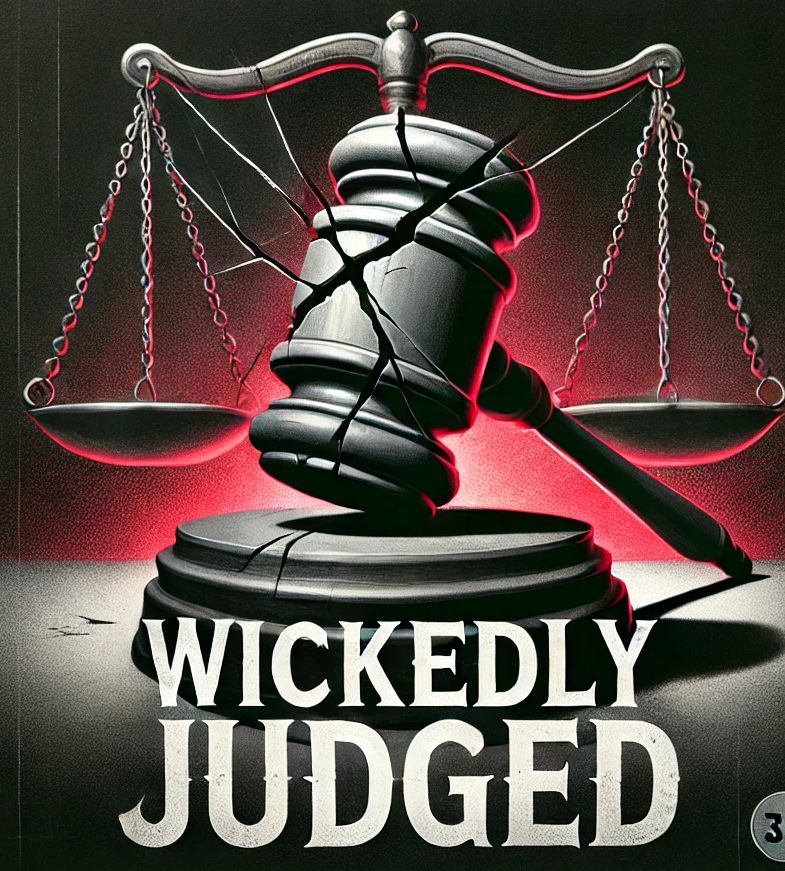
If you're reading this, first… thank you. Because I know it's been a while.
A lot of people have messaged me asking: "Where did you go?" "Why did the podcast disappear?" "Are you still fighting?" "Did you give up?"
And honestly… that question is harder to answer than people probably realize.
Because the truth is… I never stopped caring. I never stopped fighting. And I never stopped believing in why this podcast was created in the first place.
But somewhere along the way… this stopped being just a podcast for me. This became my life.
The Part You Didn't See
And over the last year… my life became consumed by this fight in ways I never expected.
Behind the scenes, I've been writing motions connected to my husband's case. Not just reading paperwork… actually sitting down night after night trying to learn how to properly draft legal arguments, understand procedural rules, organize evidence, study case law, and prepare filings connected to his case.
And let me tell you something… there is nothing normal about teaching yourself how to navigate a legal system because you feel like you have no other choice.
There were nights where I questioned whether I was even capable of doing any of this. But when someone you love is sitting behind prison walls… you push yourself further than you ever imagined possible.
I've also been working on putting together a parole packet for his parole hearing coming up in June. And honestly… that process alone has been emotionally exhausting. Because when you prepare something like that… you are not just gathering paperwork. You are trying to summarize years of a person's life — growth, rehabilitation, accomplishments, support system, character, and humanity — into documents that you hope someone will truly look at.
You're trying to show that this is more than an inmate number. More than a case file. More than a headline. You're fighting to remind people that there is an actual human being behind those prison walls.
And balancing all of that… while trying to build an organization, continue advocacy work, support families, and emotionally survive myself… became overwhelming at times. There were moments where I felt like I was carrying the emotional weight of ten different lives all at once.
But at the same time… this process changed me. Because the deeper I got into the system… the more I realized how many other families are living this exact same nightmare every single day.
Why I Went Silent
Over the last year, I disappeared from the microphone because I was drowning in research, court records, legal procedures, phone calls, interviews, emotions, frustration, exhaustion… and honestly — moments where I questioned whether I was strong enough to keep carrying all of this.
But during that silence… something else was happening. Something bigger was being built.
What Wickedly Judged Was Always Meant To Be
When I first created Wickedly Judged, I thought I was starting a podcast. I thought I was creating awareness. I thought I was giving people a voice. I thought I was telling stories that mattered.
And I was.
But I didn't understand how deeply this work would change me.
This podcast was never about entertainment for me. It was born out of pain. It was born from watching someone I love become trapped inside a system that I truly believe failed him. And once you start seeing behind the curtain of the justice system… you can never unsee it.
I remember thinking: Surely if someone is innocent… the system will eventually fix itself. Surely truth matters enough. Surely if mistakes are exposed, someone will care enough to correct them.
And then I learned something terrifying.
Sometimes procedure becomes more important than truth. Sometimes access to justice depends on money, legal knowledge, timing, resources, and understanding systems that most ordinary people were never taught to survive.
And that realization changes you.
Because suddenly you aren't just emotionally connected to a case anymore. You become obsessed with understanding everything. Court filings. Appeals. Evidence rules. Police reports. Witness statements. Transcripts. Procedural deadlines. Records requests.
You start trying to teach yourself an entirely different world because you feel like you have no other choice.
There were nights where my entire dining room table was covered in paperwork. Transcripts stacked on top of legal pads. Highlighted court documents. Sticky notes hanging out of folders. Timelines written across notebooks. Research tabs open all over my laptop.
And I would sit there until 3 or 4 in the morning trying to understand legal language I was never trained to understand.
Not because I wanted to become a lawyer. But because when you believe someone you love has been wrongfully convicted… you either learn how to fight… or you drown.
The Emotional Reality Nobody Talks About
And what hit me even harder… was realizing how many other families were drowning too.
The messages started coming in from people all over the country. Different states. Different backgrounds. Different cases. But the stories sounded painfully similar.
Missing evidence. Contradictory witness statements. False narratives. Procedural barriers. Families ignored. People feeling voiceless.
And honestly… that broke me in ways I wasn't prepared for.
People think advocacy is just speaking publicly. But advocacy is emotional labor. It's carrying stories that stay with you long after the phone call ends. It's hearing a mother cry while asking if her child will ever come home. It's hearing children ask why their parent missed another birthday.
It's trying to stay emotionally stable while constantly consuming trauma, injustice, and pain.
And eventually… I started realizing something that terrified me.
This system doesn't just affect incarcerated people. It emotionally imprisons entire families.
Birthdays become painful. Holidays feel incomplete. Phone calls become lifelines. Every legal filing becomes attached to hope. And every denial feels like grief all over again.
There were moments where I became deeply frustrated. Because families are expected to navigate legal terminology, filing deadlines, appellate rules, evidentiary standards, and procedural requirements… while simultaneously surviving emotionally and financially.
Most people are not prepared for that. And honestly… they shouldn't have to be.
The Financial Wall
And there's another part of this conversation that people do not talk about enough.
Fighting a wrongful conviction is incredibly expensive.
And I don't think the average person truly understands just how financially devastating this process becomes.
People hear the words "appeal" or "post-conviction motion" and think there's some automatic path to justice if mistakes were made. But that's not reality.
Reality is:
- Transcripts cost money.
- Court filings cost money.
- Attorneys cost money.
- Investigators cost money.
- Experts cost money.
- Travel costs money.
- Records requests cost money.
And every single step feels like another financial wall standing between families and the truth.
There are families draining savings accounts. Selling possessions. Working extra jobs. Borrowing money. Sacrificing stability. Putting their lives on hold. Just trying to keep fighting for someone they love.
And what makes it even harder… the system is built in a way where many people eventually run out of resources before they run out of questions.
That's the heartbreaking reality.
Because once someone is convicted… the burden shifts almost entirely onto the family and the incarcerated person to prove something went wrong. And proving that takes money, time, legal knowledge, emotional endurance, and access to resources that many ordinary people simply do not have.
And honestly… I believe the courts understand that. They understand that most families are not financially equipped to fight years of legal battles. They understand how overwhelming procedural rules are. They understand how expensive litigation becomes. They understand that many people eventually become emotionally and financially exhausted.
And for a lot of families… that exhaustion becomes another barrier to justice.
That realization hit me hard. Because I started realizing that access to justice often depends on access to resources. And that should terrify every single one of us.
Truth should not belong only to the people who can afford to chase it.
I remember sitting there one night surrounded by paperwork thinking: How many people stay trapped simply because nobody knows how to fight correctly?
How You Can Help
Listen and share. Tune in to the Wickedly Judged podcast and share episodes with people who need to hear these stories.
Support the mission. Purchase merchandise or donate directly — every dollar funds investigations, legal filings, and family support.
Submit a case. If you know someone who was wrongfully convicted, submit their case for review.
Spread the word. Follow us on social media and help amplify the voices of the wrongfully convicted.
Final Thoughts
This silence was never about giving up. It was about building something that could actually make a difference — not just for my husband, but for every family fighting the same fight.
The Wickedly Judged Justice Activation Project is bigger than a podcast now. It's an organization. It's a movement. It's a community of people who refuse to accept injustice as the final answer.
And I'm back. Stronger. More focused. More determined than ever.
As always, stay informed, stay vigilant, and stay hopeful. Because NOBODY deserves to be Wickedly Judged.